When Sustainability Becomes a Business Operating System
18 October 2026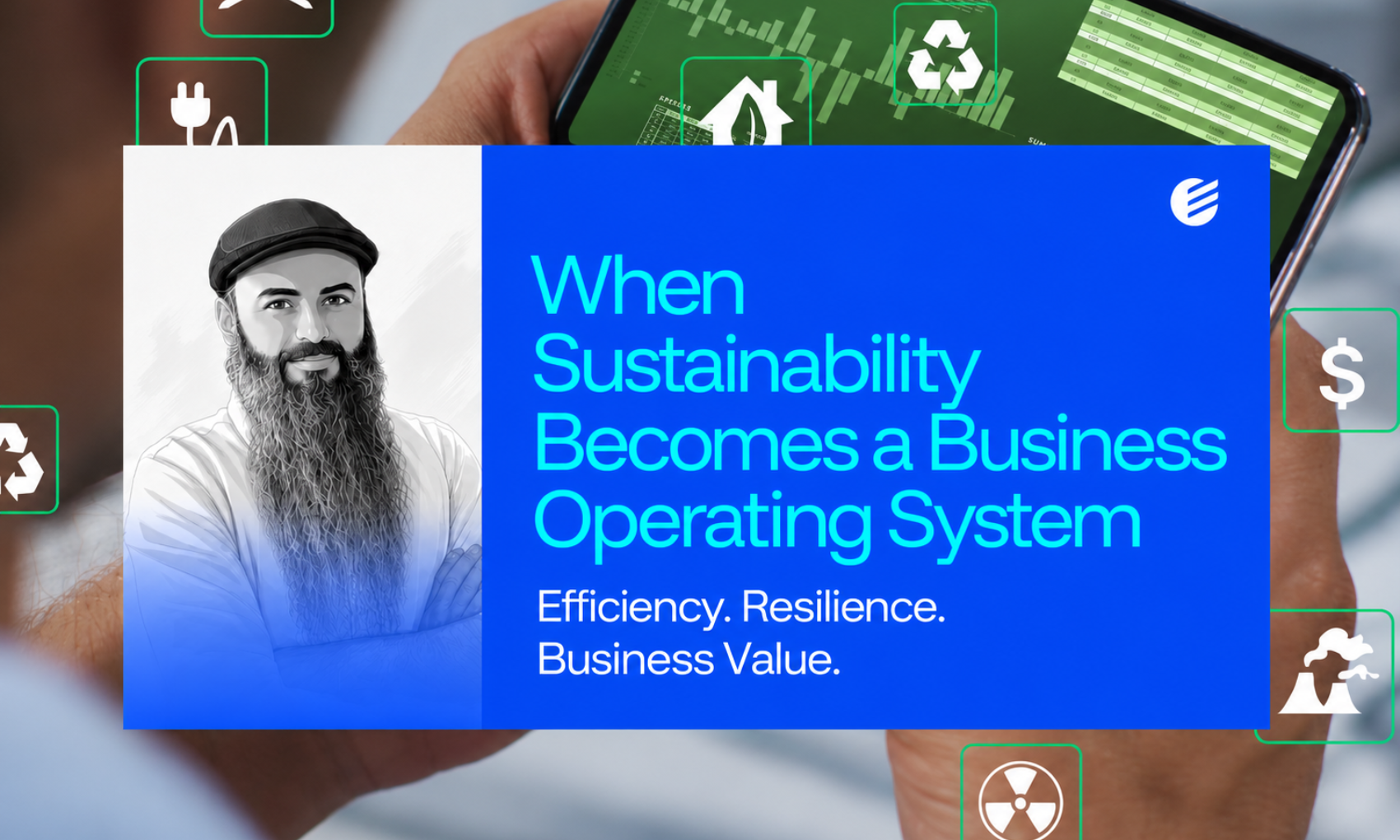
For years, corporate sustainability was measured primarily through reports, targets and regulatory compliance. Today, its most meaningful test lies in day-to-day operations. Sustainability is entering control rooms, maintenance systems, supply chains and decision-making processes. Rather than existing as a separate track alongside business activity, it is beginning to influence how organizations manage resources, maintain systems, select equipment, address risks and plan for the long term.
Einav Tsabari, from the Business Strategy Development Department and ESG and Analytics Lead at Electra FM, describes an approach that connects resource efficiency, business continuity, service quality, user experience and financial performance. In other words, sustainability is not merely a measure of an organization’s environmental impact. It is becoming part of the way the organization manages its overall performance.
This shift is particularly significant in the built environment and infrastructure sectors. According to data from the United Nations Environment Programme cited by Tsabari, the buildings and construction sector is responsible for approximately 37% of global carbon dioxide emissions and accounts for half of the raw materials extracted worldwide. A significant part of the opportunity to change this picture therefore lies in the decisions made every day in the management of assets, systems and resources.
When Environmental Data Becomes Business Data
One of the most significant changes is the transition from periodic measurement to continuous management.
Building management systems, sensors, energy and water meters, and occupancy data now make it possible not only to measure how many resources have been consumed, but also to understand how a site is actually performing. HVAC and lighting systems can be adjusted according to occupancy, consumption anomalies can be identified, deterioration in equipment performance can be detected, and maintenance can be scheduled before a failure occurs.
This is where the direct connection between sustainability and business performance begins. “kWh, water and waste translate into cost, availability, risk and service quality,” explains Tsabari.
An increase in energy consumption, for example, may represent more than an environmental metric. It can also indicate a decline in system performance. Information about equipment condition can enable earlier intervention and reduce the risk of failure and downtime. In this way, the same data that helps reduce consumption can also lower costs, improve availability and support more precise operational decision-making.
Artificial intelligence is also expected to expand these capabilities through load forecasting, prioritization of service calls, and the identification of relationships between consumption, weather, occupancy and equipment performance. But technology alone does not create value. Tsabari emphasizes that high-quality data, a reliable baseline, clear managerial accountability and professional oversight by engineering and operations teams are all essential.
Price Is Only the Beginning of the Calculation
The connection between sustainability and business value does not end with energy consumption. It is also changing the way organizations evaluate investments and procurement decisions. “Instead of selecting equipment and services based solely on the purchase price, decisions are made according to the total cost over the entire life cycle,” writes Tsabari.
Energy consumption, equipment reliability, maintenance requirements, spare parts availability, repairability and service life all become part of the equation. A solution with a lower initial purchase price is not necessarily the most economically effective option when the number of years it is expected to remain in operation is defined and considered in advance.
This broader perspective also extends to the supply chain, including the materials, products and services an organization purchases, how they are transported and what happens to them at the end of their useful life. Durability, repairability, reuse and material recovery are gradually becoming part of the considerations involved in sustainable procurement and contracting processes.
In this sense, sustainability is not simply a way to reduce consumption. It can improve the quality of the decisions an organization makes about its assets and resources, while influencing their costs and performance over time.
When Sustainability and Resilience Meet
The business value becomes even clearer when conditions become less predictable. “An energy-efficient building is not only a building that consumes less, but one that can continue operating under conditions of extreme heat, water scarcity, energy price volatility or an unexpected disruption to the electricity or water supply,” writes Tsabari.
Energy storage, on-site generation, load management, redundancy in critical systems, and air and water quality monitoring connect resource efficiency with operational resilience. An investment that begins with an environmental objective can therefore also affect risk exposure, business continuity and the organization’s ability to cope with disruption.
This is where sustainability takes on a broader business meaning. The question is no longer only how many resources an organization consumes during routine operations, but also how capable it is of continuing to function when circumstances and environmental conditions change.
When Principles Become an Operating Model
Schneider Electric’s IntenCity building in Grenoble provides an example of how these principles can be integrated into a single system.
The approximately 26,000-square-meter office complex combines efficient architectural design, renewable energy, control systems and data analytics. According to the company, the building management system draws on approximately 60,000 data points and balances energy consumption, comfort, resilience and actual usage patterns.
The most interesting lesson from this example, however, lies in what happens after operational efficiency improves. The life-cycle analysis published by the company illustrates how the next area for improvement shifts toward materials, procurement, equipment replacement and management of the full asset life cycle.
In other words, sustainability is not a project that ends once energy consumption falls. As an organization advances, sustainability broadens the perspective and expands the decision-making framework surrounding the entire asset.
Not How Much We Did, but What We Achieved
The way organizations measure success is also beginning to change. For years, operational models were measured primarily through inputs, such as the number of employees, service hours or completed tasks. Tsabari points to a shift toward measurement that focuses more closely on outcomes: system availability, energy intensity, air quality, failure prevention, emissions reduction, material recovery and total cost over the asset’s life cycle.
This represents a significant shift from a business perspective as well. Instead of measuring only how many resources were invested in an activity, organizations can evaluate what that activity actually achieved and contributed.
The connection between sustainability and financial performance is also becoming stronger in the regulatory reporting environment. International standards increasingly address sustainability-related risks and opportunities that may affect cash flows, access to financing and the cost of capital.
In practice, sustainability is beginning to move beyond the boundaries of the traditional annual report and into the same management framework through which organizations assess costs, risks, performance and opportunities.
Far Beyond the ESG Report
Ultimately, the shift in management philosophy is not measured by the number of sustainability goals an organization has defined, but by what those goals enable it to achieve. “Sustainable management and operations do not aim merely to operate a ‘greener’ site or building, but to build a smarter, more efficient and more resilient operational system,” writes Tsabari.
According to Tsabari, the sustainable organization of the future will be one that knows how to consume less, identify anomalies earlier, prevent more failures and breakdowns, and recover more quickly from crises, while generating clear and measurable business value.
And that may be the distinction between sustainability as an obligation and sustainability as a business driver.
A shift in management philosophy directly influences the way an organization deploys resources, manages risks, invests in assets and measures results. Sustainability is no longer positioned alongside business activity. It is becoming part of the way an organization improves, strengthens, thrives and becomes more sustainable over time.