
Professionalism Begins with Responsibility – Safety Week at Electra FM
17 June 2026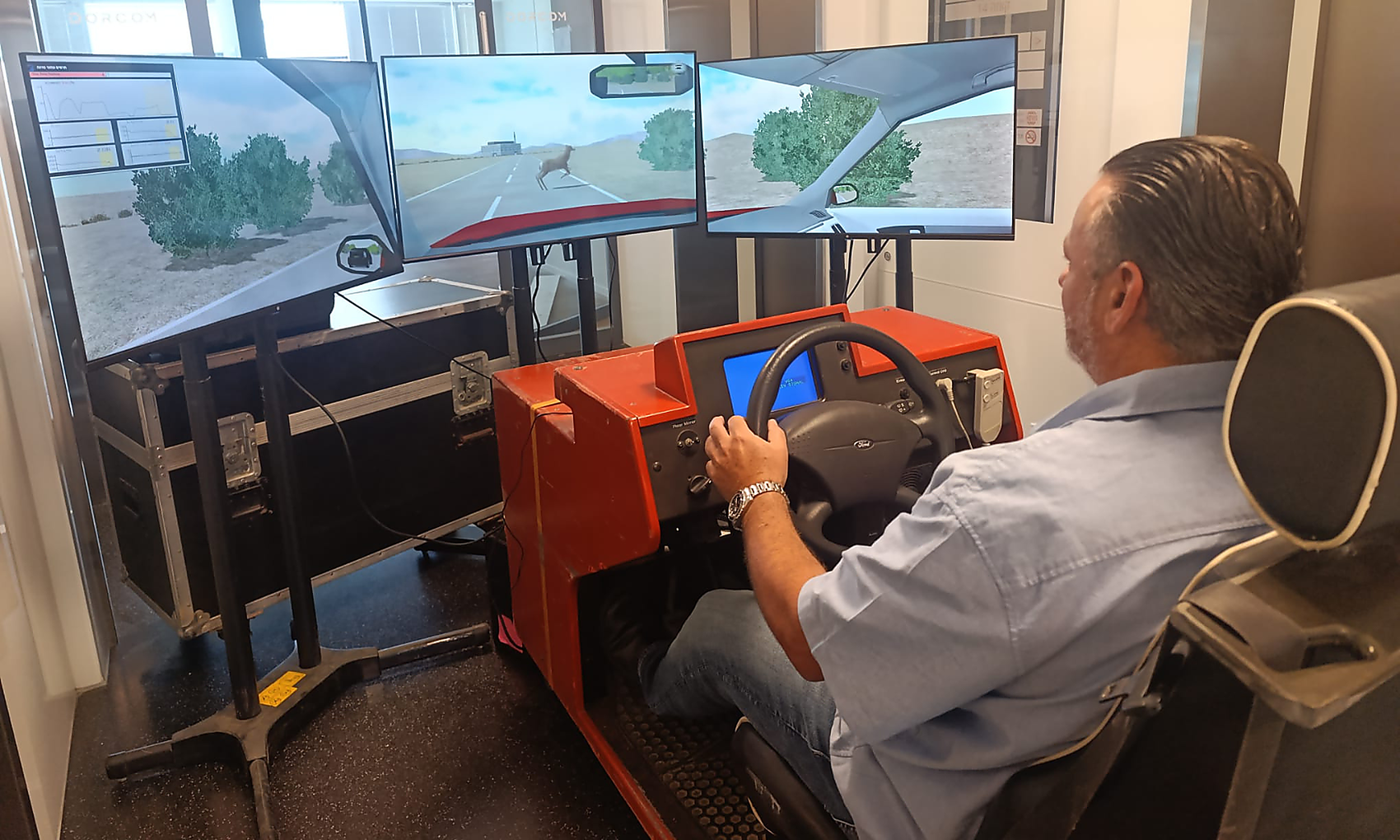
As part of Safety Week, Electra FM held a variety of activities aimed at strengthening safety awareness among all employees, both at headquarters and in the field, while continuing to promote a culture of responsibility, professionalism, and vigilance across all work environments.
Throughout the week, employees participated in a range of initiatives, including an advanced driving simulator that allowed them to experience different driving scenarios based on real-life road situations, as well as a daily safety quiz with prizes awarded to participants. These activities reinforced the understanding that safety is not limited to a specific worksite, technical system, or operational task. It accompanies employees everywhere, whether at work, in the field, on the road, or in everyday decision-making.
The central message of Safety Week was clear: safety does not stand alongside the job. It is an integral part of it. Whether driving, working with clients, performing operational tasks, carrying out office work, or managing complex maintenance activities, safe work practices are the foundation of professional performance.
One of the key perspectives highlighted during the week focused on the maintenance field, where managing risks is an inherent part of daily operations. Mishel Megira, Safety Supervisor in Electra FM’s Maintenance Division, explains that maintenance professionals work every day in environments that involve electricity, working at heights, mechanical equipment, and critical systems. In such settings, safety is not an additional step in the process. It is an inseparable part of the job itself.
According to Megira, safety begins long before the actual task is performed. It starts with the way a task is approached: taking the time to understand the risks, assessing the work environment, and following established procedures rather than relying on routine or the mindset of “the way we’ve always done it.” A true professional never skips steps, even when the task appears routine, when time is limited, or when the work seems simple.
There are safety rules that should never be bypassed under any circumstances. Working at height without proper protective equipment, performing electrical work without isolation and verification procedures, operating near heavy machinery without clearly marking and securing the work area, or using defective equipment are not shortcuts. They are real risks that can endanger employees, teams, and the surrounding environment.
For this reason, one of the most important principles is to stop and assess before beginning any task. Sometimes a single minute is enough to evaluate the surroundings, identify potential hazards, verify that equipment is suitable and functioning properly, and determine the safest way to proceed. In the field, many incidents are not caused by a lack of professional knowledge, but rather by inattention, routine behavior, or the assumption that “everything will be fine.”
A strong safety culture is built on personal responsibility as well as organizational commitment. It requires managers who never compromise on safety standards, relevant professional training, knowledge sharing from the field, and open discussions about risks, incidents, and near misses. When employees and managers engage in ongoing conversations about safety, learn from experience, and work together, a safer work environment is created for everyone.
As Megira concludes: “Ultimately, the goal is not only to complete tasks or solve problems, but to ensure that every employee returns home safely at the end of the day. Every moment taken to stop and assess, every adherence to procedure, and every correct decision made in the field contributes to protecting lives.”
Safety Week reflects Electra FM’s ongoing commitment to fostering a safe, professional, and responsible work environment for all employees. Throughout the year, the company promotes safety awareness through training programs, experiential activities, knowledge sharing, and continuous learning from field experience, recognizing that safety is an essential component of operational excellence and organizational responsibility.